


My room is pitch black. Rain taps on my window politely asking me to wake up.
I throw myself out of bed and open the windows—only to be met with darkness and a louder sound of rain.
It’s winter again though it feels like yesterday was the first day of summer.
My schedule is the same but my obligations are different.
In the summer it was sunlight. Making a run outside to wake up and reset my circadian rhythm.
Now it’s prayer, centering myself with purpose and something bigger than myself.
I crack open my bible to reveal yesterday’s highlights. I’m currently going through the book of Ecclesiastes.
A fitting book for this time of year. When it’s cold we are reminded how nice it is to stay inside. To eat food, consume, and enjoy the warmth.
Yet this book reminds me that this is simply vanity. It can only go on for so long.
For years, I tried to train the same way year-round. Same volume, same intensity, same goals. I thought consistency meant never changing. I was wrong.
The Catch-Up Game (And Why We’re All Playing It)
Splitting up my training based on the season has helped me avoid playing catch up. I love to train everything. Move as much as possible.
However I found this year that I didn’t set up my foundations well.
By not preparing my strength foundation in the winter I was left “hybrid training” in the summer. Overloading with volume by running and lifting.
I was exhausted, injured, and nowhere near the athlete I imagined I’d become.
This is a problem I see in most of the new hybrid culture. We’re all falling into the same trap. We see these specimens emerge who can lift absurdly, look like bodybuilders, and run fast marathons.
Instead of understanding that this performance is built over time, we chase it all at once.
Our weekly programs become distracted and we end up trying to kill three birds with one stone. Leading to suboptimal development in all three disciplines.
I’m still learning this the hard way. Still catching myself adding “just one more session” when my body is begging for rest.
But here’s what I’ve discovered: my way of building relies on the beauty of maintenance.
Once you’ve built something, the body is remarkably cheap to maintain:
Strength takes 1–2 hard sessions a week to maintain
Muscle takes just 1 close-to-failure session weekly
Endurance holds with 2 weekly aerobic sessions
Speed needs 1 high-quality sprint or power session per week
The problem? We think we can grow these metrics at maintenance rates. That’s not the case.
This leads to the beauty of seasonal training. Building one thing at a time, maintaining the rest.
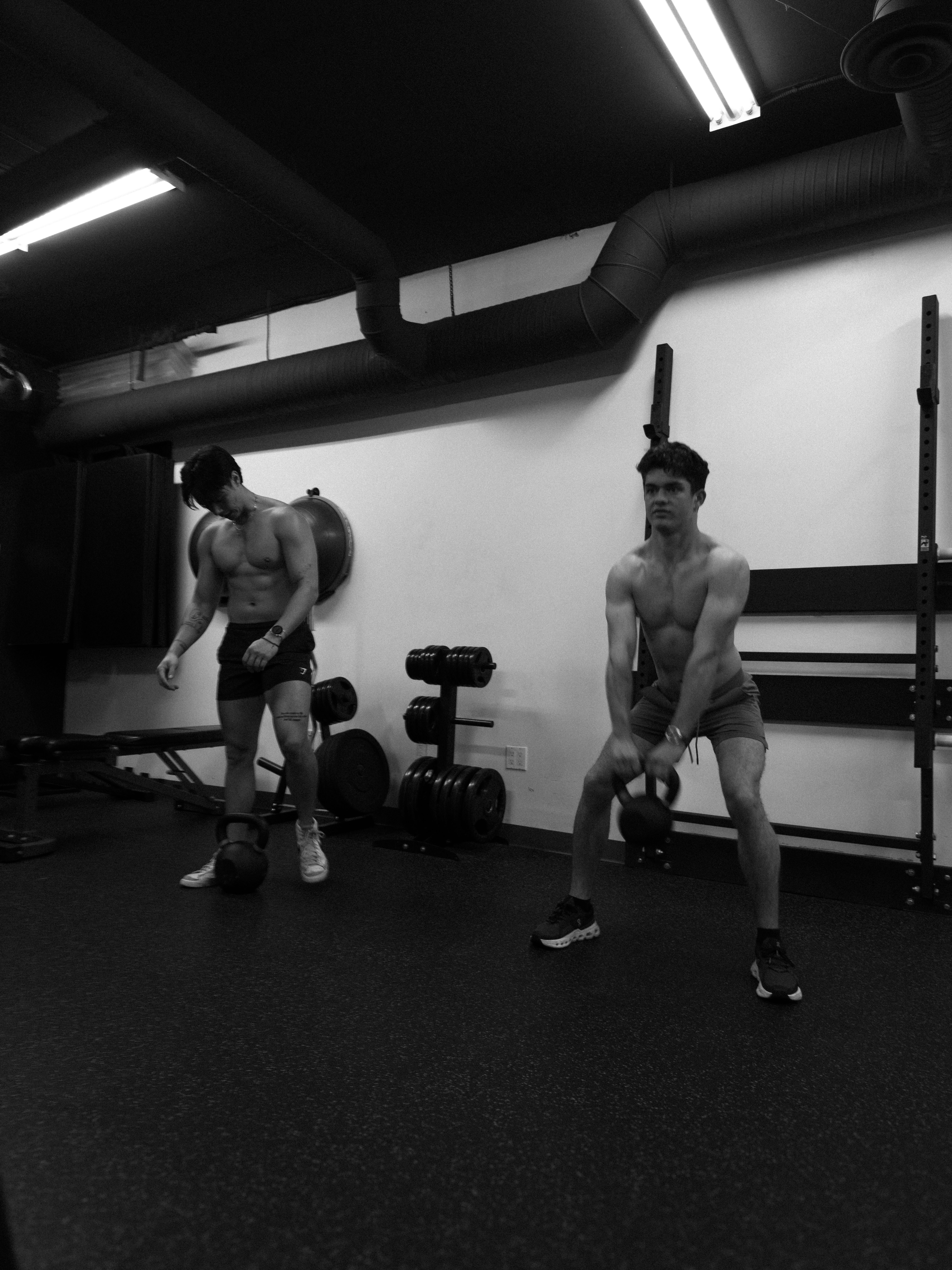
Winter: The Season to Sow
Our cycles should reflect nature, not productivity culture.
I enjoy the winter season because it’s darker. I am constantly reminded of my body’s desire for comfort and rest.
Yet besides that, it is also my favorite period for growth.
From my view the year is broken down into two periods:
A period to sow
A period to reap
Winter is the period to sow. It gives us the ability to plant the seeds that will grow through the summer.
This is where we set our foundation for strength, discipline, and mental fortitude.
For the winter the season is for strength development and muscle development. Notoriously known as “bulking season” in bodybuilding spaces.
Though the idea is the same, the premise is different. Bodybuilders rely on calorie input, getting as much food as possible to put on as much mass.
As ancestral athletes the focus should be on metabolic flexibility, progressive overload, and a holistic growth phase.
Here’s what this actually looks like for me:
I prioritize clean nutrient-dense foods that provide the proper building blocks for tendon strength, muscle synthesis, and recovery.
This way of eating is seen around the globe in Chinese and Indian holistic medicine cultures. We see it in the west—though it isn’t talked about.
In the winter we have an innate craving for fattier foods. Stews, gelatinous meats, root vegetables, and roasted carbs.
These are foods that provide us with everything we need to build and develop a solid strength foundation.
Last December, I stopped fighting these cravings. Stopped forcing myself to eat “clean” summer foods. My recovery improved within two weeks.
My winter training template:
3-5x Heavy lifting sessions
1-2x Zone 2 cardio sessions
Preferably something that consistently overloads like a good 5x5 powerlifting program or a full body program to get appropriate volume.
The benefits? The strength built here reduces our propensity for injury and improves our physiques for the warmer seasons. We’re not starting from zero when summer arrives.

Summer: The Season to Reap
The sun rises early, energy is high, and commitments increase.
I love the summer for community. Hosting barbecues, dinners, campfires, and exploring the world. Nature becomes integrated in our life differently than it is in the winter.
Instead of wanting to escape from it, we dive in head first.
This is one of my favorite seasons for improving cardiovascular health. Running, swimming, hiking—the summer is cardio on autopilot.
It becomes harder to hit those heavy lifting sessions in a hot gym and easier to want to go out for a jog, a swim, or an outdoor mobility session.
This is the period for holistic movement. Improving our body’s engine so we can take and handle more.
I focus less on developing strength and my physique and instead work on developing endurance and power output.
My goal is to get explosive, fast, and maintain it for a long period at a time.
This is new territory for me—I’ve been mainly a bodybuilder for the last 6-7 years of lifting. I’m figuring this out as I go, making mistakes, adjusting.
What worked for me this summer:
3-5x zone 2 cardio sessions
2-3x sprint and power sessions
1-2 heavy lifting days (just enough to maintain)
I quite enjoy double days during the summer because my energy is higher and I love being outdoors.
I’m learning more about power development as I write this but a good foundation is simple interval training.
Running 45s-3min at a targeted pace, and recovering at a 1:2 working:resting ratio.
For me: a 2min run at 4:15 pace, followed by a recovery jog at 6:30 pace for 2min. Repeated 8-10x.
Nothing fancy. Nothing perfect. Just consistent effort aligned with the season.
Your First Step (Start Today, Not Monday)
Right now the season is getting colder and the days are shorter.
Instead of beating yourself up that you aren’t a 1% hybrid athlete yet, give yourself permission to build your strength base. You don’t need to have it all figured out.
If you’re starting from zero, here’s your protocol:
Start with 1-3 sessions a week and train full body. Prioritize compound movements and good form. Messy is fine. Imperfect is expected.
If you haven’t done any cardio, don’t worry about working on a sub-three marathon right now. Focus on moving more.
1-2x sessions a week of light cardio. Walking, stationary biking, anything that gets your heart rate up without destroying you.
The key here isn’t to overdo it or else we’ll see a decrease in the overall improvement of our strength.
However by focusing on light movement the body will adapt and improve to match your inputs.
Here’s what to do today:
Morning people: Before your first coffee, do 5 minutes of any movement. Bodyweight squats in your kitchen. Push-ups in your bedroom. Doesn’t matter. Just move.
Evening people: After dinner, take a 10-minute walk. No phone, no podcast. Just you and the cold air.
Gym-goers: Pick 3 compound movements for this week. Squat, bench, deadlift. Or squat, overhead press, row. That’s it. Do them twice.
You don’t need a perfect program. You need to start planting seeds.
Let nature enforce your cycle, not productivity culture.
We’re in winter. Act like it.